Why PSAPs and Communications Centers Belong in the Same Collaboration Network as Field Responders
For decades, Public Safety Answering Points (PSAPs) and communications centers have served as the nerve center of emergency response. They receive calls for service, dispatch resources, coordinate mutual aid, relay critical information, and maintain situational awareness across multiple incidents simultaneously.
Yet while field responders have increasingly adopted digital messaging and collaboration tools, most communications centers continue to rely primarily on radio, CAD, email, and telephone calls.
The result is an operational disconnect.
As more public safety communication moves beyond the radio, communications centers risk being left outside conversations that increasingly shape operational decision-making.
Connecting PSAPs directly to the same secure collaboration environment used by field responders creates significant operational advantages, both within their own jurisdiction and across neighboring communications centers.
Public Safety Communications Have Changed
Radio remains the foundation of emergency communications.
It always will.
But radio is no longer the only operational communication channel.
Today’s responders routinely exchange:
- Photos
- Maps
- Documents
- Resource requests
- Situational updates
- Intelligence
- Planning information
- Operational decisions
Many public safety leaders estimate that between one-half and two-thirds of operational communications now occur through digital messaging rather than voice alone. While precise percentages vary by agency and incident type, there is little debate that digital collaboration has become a routine part of daily public safety operations.
Unfortunately, that digital evolution has not always included communications centers.
While responders collaborate through messaging platforms, dispatch personnel often remain dependent on radio traffic, CAD notes, emails, and phone calls to stay informed.
That creates unnecessary information gaps.
Dispatch Should Be Part of the Conversation
Communications centers should not simply relay information.
They should participate in it.
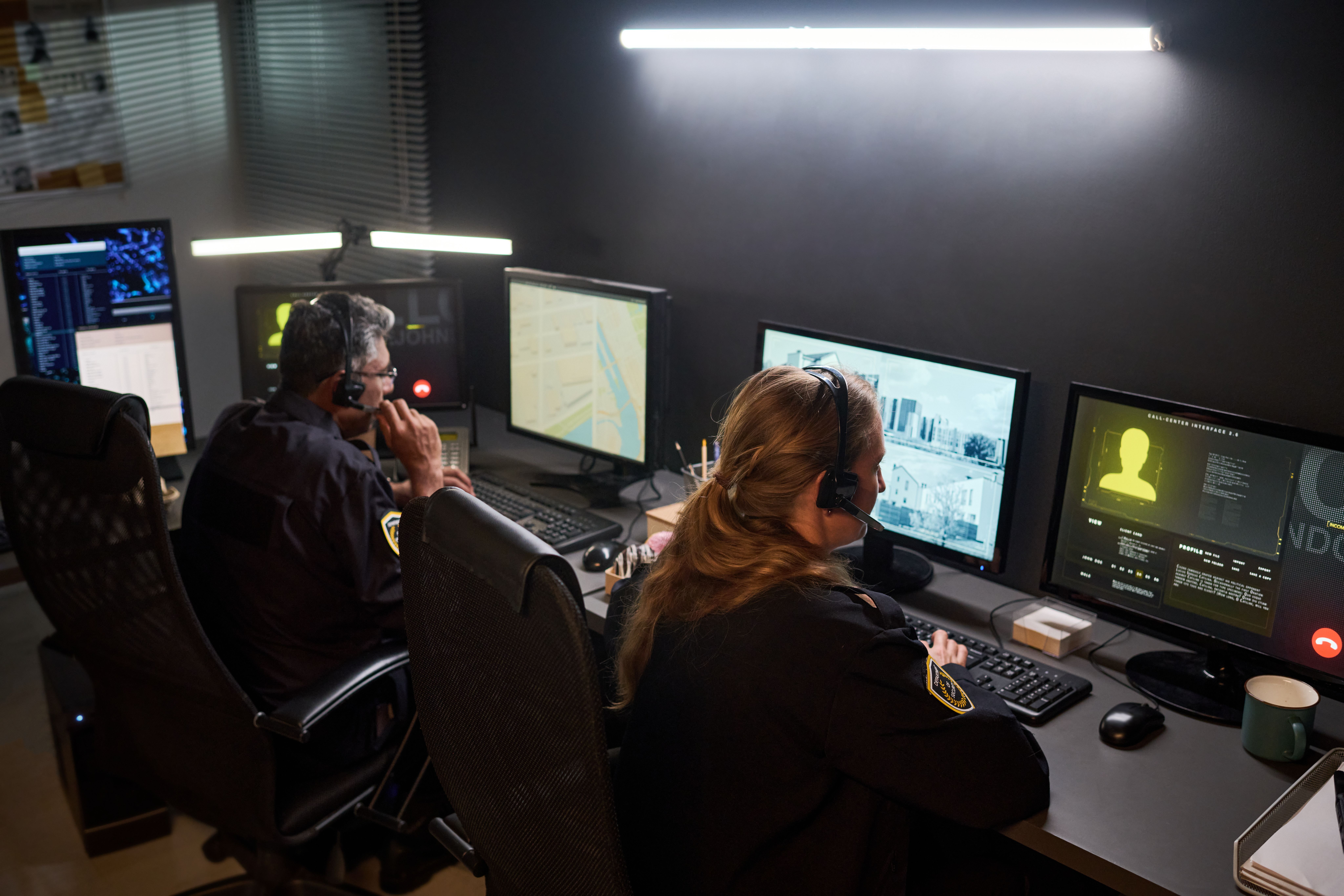
Unlike mobile responders, dispatchers typically work from desktop workstations with multiple monitors and continuous access to operational systems.
That makes communications centers uniquely positioned to monitor collaborative operational channels while simultaneously supporting radio operations and CAD.
Instead of waiting for information to be relayed through phone calls or radio traffic, dispatch personnel can observe operational updates as they happen.
This creates a richer operational picture while reducing the need for repeated status requests and redundant communications.
Dispatchers gain greater awareness of:
Developing incidents
Resource availability
Road closures
Utility outages
Weather impacts
Command decisions
Interagency coordination
Planned operational changes
The result is faster information sharing and improved operational awareness for everyone involved.
Desktop Collaboration Complements Radio
One common misconception is that collaboration platforms replace radio.
They do not.
Radio remains the fastest method for immediate voice communications.
Collaboration platforms complement radio by supporting the information that voice communications cannot efficiently manage.
Rather than occupying valuable radio airtime with lengthy updates, maps, documents, photos, planning discussions, or administrative coordination, those conversations can occur within a shared collaboration environment where they remain organized and accessible.
This allows radio traffic to remain focused on time-sensitive operational communications while providing dispatch and field personnel with richer context.
Connecting Communications Centers Across Jurisdictions
The second opportunity is even more significant.
Communications centers rarely operate in isolation.
Major incidents frequently require coordination with neighboring PSAPs, regional dispatch centers, emergency management agencies, state operations centers, utilities, transportation departments, and numerous other partners.
Today, much of that coordination still occurs through:
- Phone trees
- Individual phone calls
- Mutual aid contact lists
While these methods work, they are often sequential rather than collaborative.
Information moves from one organization to another instead of being shared simultaneously among all authorized participants.
A shared collaboration environment changes that model entirely.
Instead of calling multiple communications centers individually, dispatch personnel can coordinate within a common operational channel where every participating agency receives the same information in real time.
That reduces delays.
It reduces duplication.
Most importantly, it improves shared situational awareness.

Supporting Large-Scale Incidents
The value becomes especially apparent during disasters, regional emergencies, severe weather, large public events, and other incidents involving multiple jurisdictions.
Communications centers often become the primary coordination hub.
They answer requests from multiple agencies while simultaneously supporting field responders, emergency management, elected officials, utilities, hospitals, transportation agencies, and neighboring jurisdictions.
Without a shared collaboration environment, much of that coordination occurs through dozens of separate conversations.
With a secure public safety collaboration platform, those conversations become organized around the operation itself rather than individual communication methods.
Everyone works from the same operational picture.
Everyone sees the same updates.
Everyone spends less time relaying information.
Improving Regional Interoperability
Interoperability has traditionally focused on radio communications.
Today’s operational environment requires digital interoperability as well.
Communications centers need the ability to collaborate securely with neighboring jurisdictions before, during, and after major incidents.
A verified nationwide public safety network makes this possible.
Instead of maintaining individual contact lists or searching for phone numbers during an emergency, authorized users can locate verified public safety partners through a shared professional directory and begin collaborating immediately.
That capability becomes particularly valuable during:
- Regional disasters
- Mutual aid responses
- Multi-jurisdictional investigations
- Planned special events
- Severe weather
- Infrastructure outages
- Cyber incidents
The faster communications centers can connect with one another, the faster operational decisions can be made.
Built Specifically for Public Safety
Bridge4PS was originally funded by the U.S. Department of Homeland Security to create a secure, interoperable collaboration environment for verified public safety professionals nationwide.
Unlike general business collaboration tools or consumer messaging applications, the platform was designed around real-world public safety operations.
For communications centers, that means providing secure desktop collaboration alongside mobile access for field personnel within the same operational environment.
The platform enables communications centers to collaborate with:
Law enforcement
Fire
EMS
Emergency management
State agencies
Neighboring PSAPs
Fusion centers
Transportation agencies
Utilities
Other authorized public safety partners
All within a single verified public safety network.
The Future of Public Safety Communications Includes PSAPs
Communications centers have always been the backbone of emergency response.
As public safety communications continue evolving beyond voice alone, they should remain at the center of operational coordination.
Connecting dispatch personnel directly to the same collaboration environment used by field responders improves situational awareness, strengthens interoperability, reduces communication delays, and enables real-time coordination across jurisdictions.
The future of public safety communications is not replacing radio.
It is connecting every part of the response ecosystem through secure, real-time collaboration.
To see how Bridge4PS supports large-scale interoperability and operational coordination across Texas, read our Texas TAK case study:
For additional information about the importance of interoperable emergency communications, the U.S. Department of Homeland Security’s Cybersecurity and Infrastructure Security Agency (CISA) provides guidance on emergency communications and interoperability:
Frequently Asked Questions
Ready to strengthen your team's communication security?
See how Bridge4PS can transform your emergency response coordination with secure, compliant messaging built for public safety.