Digital Collaboration Is a Journey: Why Public Safety Communications Mature Over Time
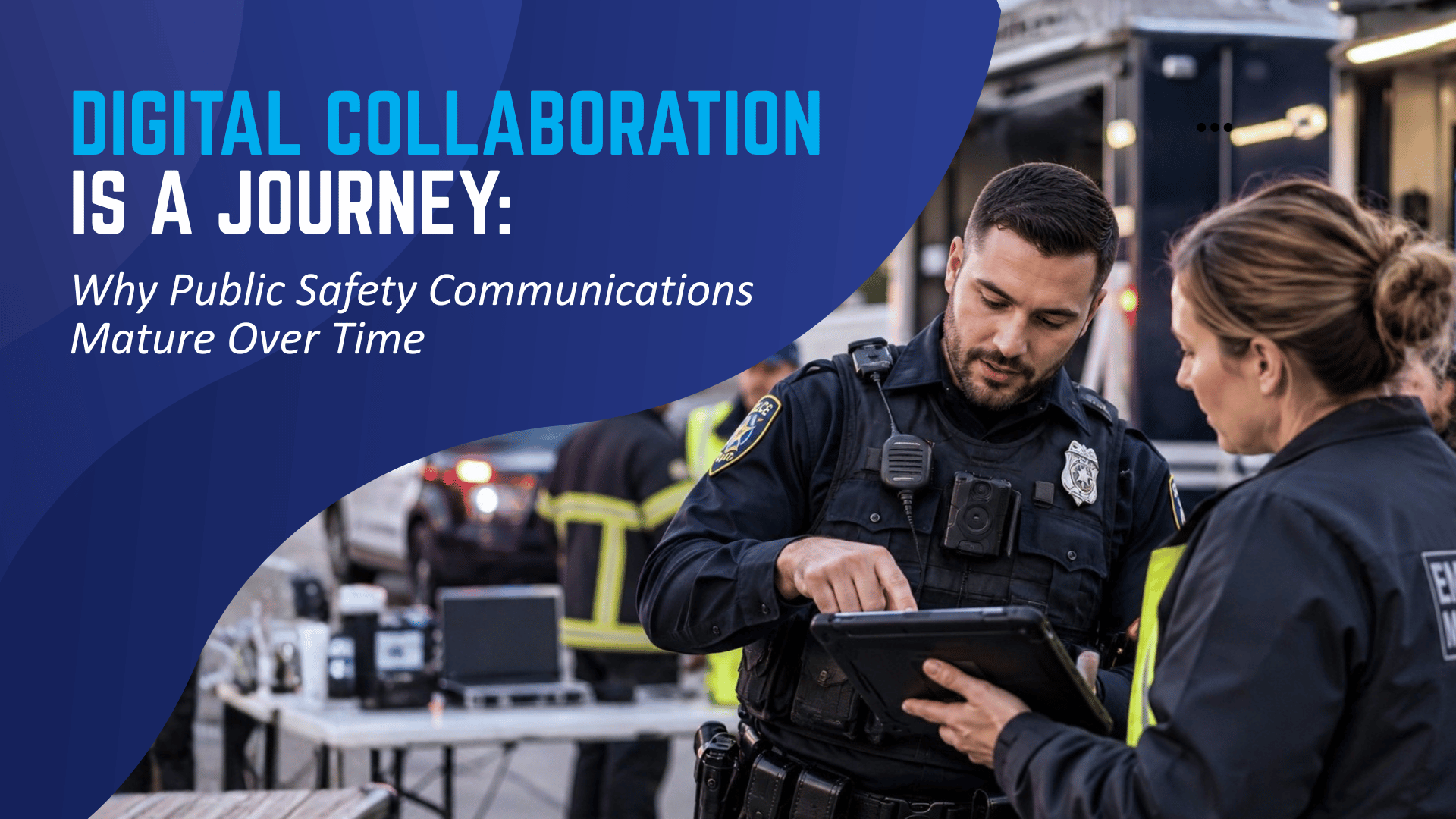
For decades, public safety has relied on a familiar mix of radio, phone calls, email, and more recently, text messaging and consumer messaging apps to coordinate operations.
Those tools evolved organically. Responders used what was available. Over time, texting became so commonplace that it was often viewed as simply another operational communication tool.
Today, public safety is undergoing another communications transformation.
Agencies are moving beyond fragmented text groups and consumer messaging apps toward secure, purpose-built collaboration platforms designed to support real-time collaboration across divisions, agencies, disciplines, and jurisdictions.
That transition is not simply a technology deployment.
It is an organizational transformation.
And like every major change in public safety, it matures over time.
Digital Collaboration Is a Maturity Model, Not a Deployment
One of the biggest misconceptions about public safety collaboration platforms is that agencies should expect to fully realize every operational benefit immediately after deployment.
That is rarely how organizational change works.
Digital collaboration is not a maturity model because agencies slowly deploy the technology.
It is a maturity model because organizations continuously mature how they use the technology.
Organizations that approach collaboration strategically often make an enterprise commitment from the beginning, recognizing that communication should not be fragmented across individual units, divisions, or specialized teams.
What evolves over time is not the platform itself.
It is the organization's communications strategy.
Users initially adopt familiar messaging capabilities as they transition away from text messaging and consumer apps.
As confidence grows, agencies begin leveraging more advanced collaboration capabilities, refining notification strategies, developing operational SOPs, strengthening governance, and expanding collaboration across internal divisions, neighboring agencies, regional partners, and state organizations.
The technology provides the foundation.
Operational maturity is built through experience.
Public Safety Messaging Is Different Than Most Technology Deployments
Unlike many public safety technologies such as drones, robots, or automated license plate recognition (ALPR), digital messaging is not something responders have to learn from scratch.
Everyone already communicates digitally.
Every responder already has years of muscle memory.
Everyone has a preferred messaging application.
Everyone has established habits for how they communicate both personally and professionally.
That makes this transition fundamentally different from deploying most new public safety technologies.
You're not introducing messaging.
You're changing long-established communication behaviors.
Changing behavior takes time.
Proficiency Comes Before Mature SOPs
Many organizations assume they need comprehensive policies governing every possible scenario before users begin collaborating.
In reality, some of the strongest SOPs emerge after agencies gain operational experience.
Exercises, planned events, day-to-day operations, and real incidents reveal how personnel naturally communicate, where information bottlenecks occur, and which workflows are most effective.
As users become more proficient, agencies refine:
- Channel organization
- Notification strategies
- Role-based communications
- Supervisor workflows
- Cross-disciplinary coordination
- Regional interoperability
- Information sharing practices
- Governance and administrative procedures
These refinements create communications strategies grounded in operational reality rather than theoretical planning.
Technology supports those improvements.
Experience shapes them.
Multi-Agency Collaboration Matures Alongside the Technology
Internal collaboration is only part of the journey.
Regional interoperability presents an even greater opportunity.
Law enforcement, fire, EMS, emergency management, dispatch, transportation, utilities, schools, hospitals, and state agencies all communicate differently.
Each organization has its own culture.
Its own workflows.
Its own operational priorities.
Its own communication habits.
Purpose-built collaboration platforms create the shared environment where those organizations can work together, but effective regional collaboration develops through repeated use.
Relationships strengthen.
Trust grows.
Shared expectations emerge.
Interagency SOPs evolve.
The result is not simply better technology.
It is a more connected public safety community.
The Texas Floods Show What Operational Maturity Looks Like
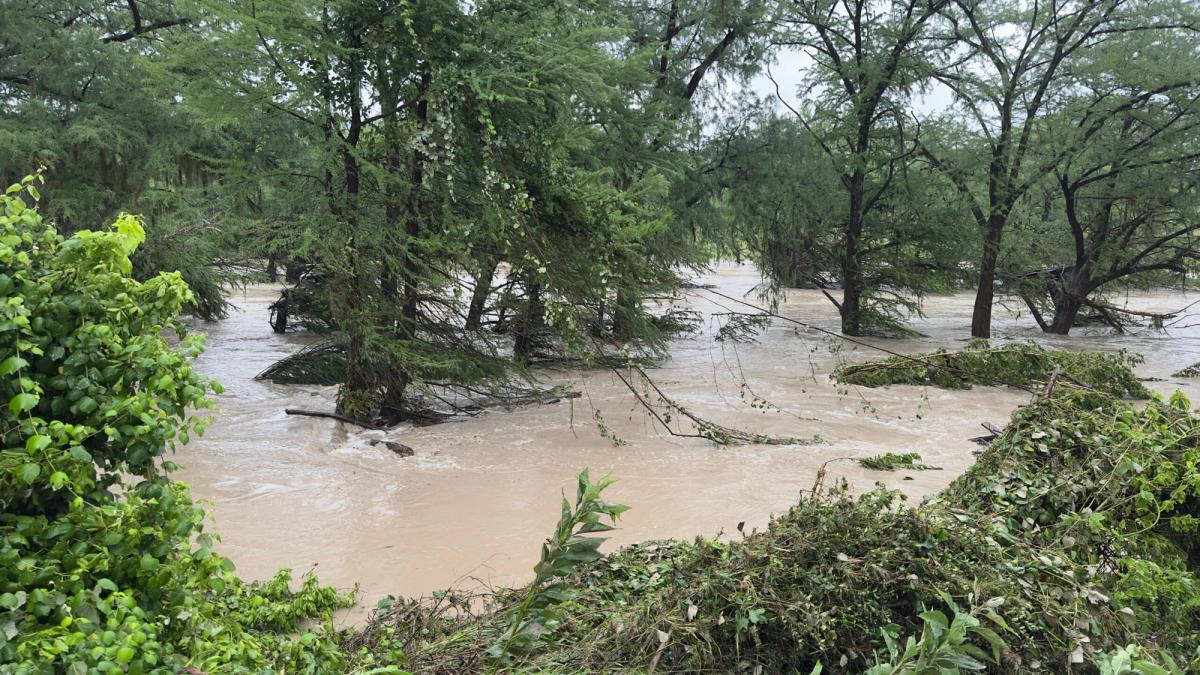
The Texas floods of 2025 and 2026 demonstrate why digital collaboration should be viewed as a journey rather than a destination.
During the 2025 floods, Bridge4PS proved to be a game changer for multi-agency coordination.
Responders from numerous organizations used the platform to share operational updates, coordinate resources, and communicate across agencies that previously relied on fragmented text groups, phone calls, and consumer messaging applications.
The value was undeniable.
It was also understandably messy.
Many responders joined during the incident.
Some agencies had little prior experience.
Communication practices were still developing.
Informal operational workflows emerged in real time.
By the 2026 floods, the communications environment had matured considerably.
Far more responders were already active users before the disaster began.
Many agencies had incorporated Bridge4PS into daily public safety operations.
Users were more comfortable with the platform.
Lessons learned from previous incidents had influenced how organizations communicated.
Operational relationships had already been established.
The result was another game-changing response.
It was still messy.
Large-scale disasters always are.
But it was noticeably less fragmented because both the technology and the organizations using it had matured together.
That progression highlights an important reality.
Operational maturity cannot be purchased.
It is earned through daily use, exercises, real-world incidents, and continuous improvement.
Innovation Never Stops
The evolution does not end once agencies become proficient.
Every major incident teaches something new.
Users identify friction.
Administrators discover better governance practices.
Responders request capabilities they never imagined needing during the initial rollout.
Developers refine workflows.
The platform evolves.
So do the organizations using it.
Bridge4PS has continuously evolved based on direct feedback from thousands of public safety professionals using the platform during planned events, criminal investigations, severe weather, disasters, school safety operations, and daily coordination.
The result is not software built around assumptions.
It is software shaped by operational experience.
Don't Let Perfect Become the Enemy of Progress
One of the biggest obstacles to modernization is the belief that every compliance requirement, retention policy, governance process, audit workflow, and operational scenario must be fully defined before users begin collaborating.
Those conversations are important.
Compliance
Governance
Retention
Auditability
But operational maturity and governance maturity often evolve together.
Organizations gain valuable insight into their communications strategy only after personnel begin using the platform during real public safety operations.
Ironically, agencies that postpone secure collaboration while pursuing perfection often continue relying on fragmented text messages and consumer messaging applications that typically provide fewer security, governance, audit, retention, and interoperability capabilities than the platform they are evaluating.
Thoughtful implementation should absolutely include compliance planning.
It should also leave room for operational learning.
The strongest communications strategies are rarely written in isolation.
They are refined through experience.
Better Habits Build Better Operations
The long-term goal is not simply replacing text messaging.
It is changing how public safety collaborates.
Daily use builds familiarity.
Familiarity builds confidence.
Confidence builds proficiency.
Proficiency produces stronger SOPs.
Stronger SOPs improve coordination.
Improved coordination creates safer, more effective public safety operations.
Eventually, organizations stop thinking of the platform as another messaging application.
It becomes operational infrastructure.
That is when the greatest value emerges.
Not because the technology changed.
Because the organization changed with it.
Built for Continuous Improvement
Bridge4PS was originally funded by the U.S. Department of Homeland Security to transform how verified public safety professionals communicate across agencies, disciplines, and jurisdictions.
From the beginning, the vision was never simply to replace text messaging.
It was to provide a secure foundation for real-time collaboration that could continuously evolve alongside the operational needs of public safety.
Every new agency.
Every exercise.
Every disaster.
Every planned event.
Every lesson learned.
They all contribute to a stronger communications strategy, more mature SOPs, and a more connected public safety community.
Real transformation does not happen on day one.
It happens one operation at a time.
Learn how the Texas Highway Patrol leveraged Bridge4PS during the Kerr County floods in our case study:
For additional guidance on building interoperable emergency communications capabilities through continuous improvement, see the Cybersecurity and Infrastructure Security Agency's National Emergency Communications Plan (NECP):
FAQ’S
Ready to strengthen your team's communication security?
See how Bridge4PS can transform your emergency response coordination with secure, compliant messaging built for public safety.