The Hidden Danger of Informal Messaging in Public Safety
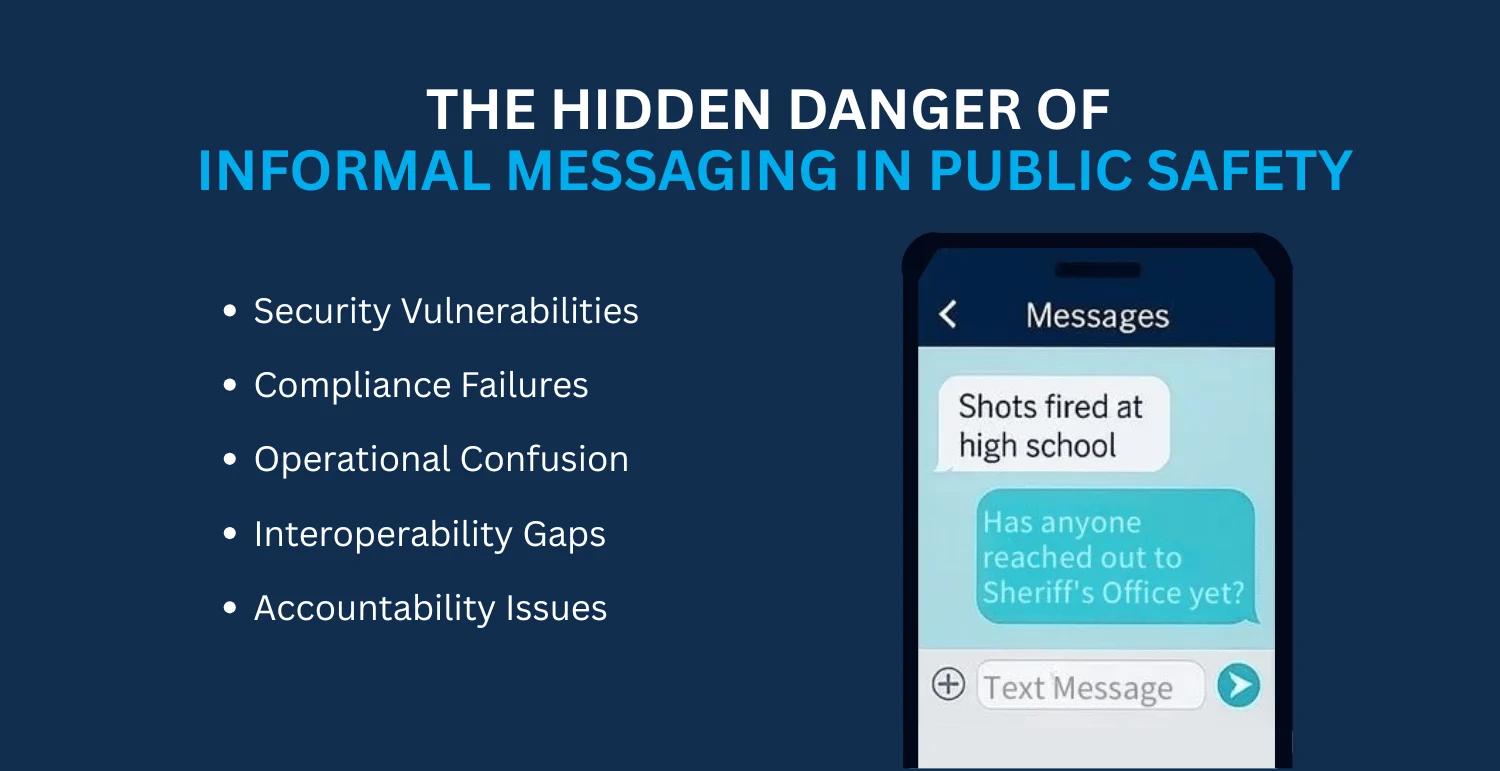
For decades, text messaging has quietly become a core component of how public safety teams communicate. Quick, convenient, and universal, it naturally filled gaps where radios and email fell short. But as other tools evolved—guided by formal procedures, training programs, and technical oversight—texting has remained informal.
The Problem: Informal Communication in Critical Operations
Today, texting is the only communication method regularly used in emergency response that is not issued by the department, trained in the academy, governed by ConOps or SOPs, or built into large-scale exercises. It’s heavily relied on in everything from SWAT operations to natural disaster response, yet it remains disconnected from formal incident management systems like ICS.
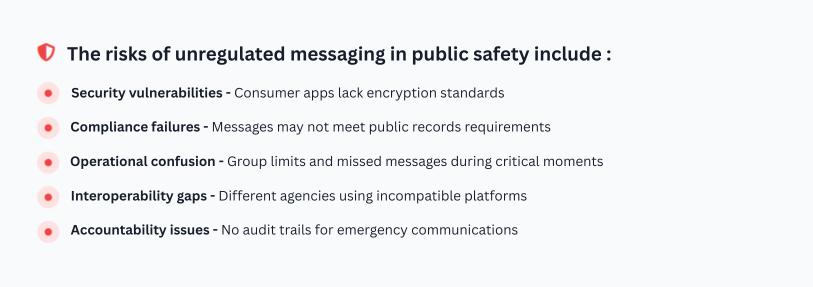
The consequences are predictable: communication failures consistently top After Action Reports as leading contributors to avoidable loss of life and property during disaster operations. Group text limitations, inaccurate contact lists, redundant threads, and missed messages create confusion at the moments when clarity is most needed. Worse still, many public safety personnel continue to rely on consumer-grade messaging apps that are not compliant with public records laws or security standards.
Real-World Consequences: When Messaging Goes Wrong
Consider the recent case involving a high-level Signal group chat used by senior US officials. The chat was intended for secure coordination, but when a journalist was mistakenly added, sensitive details about military strikes against Houthi rebels in Yemen were inadvertently shared. Launch times for aircraft and missiles, along with operational plans, were exposed, leading to a significant security breach. Such vulnerabilities highlight the risks of relying on unregulated messaging platforms for critical information.
“We wouldn’t accept radios with 20-user limits or email systems that can’t interoperate across agencies—so why are we still accepting those limitations in our messaging?”
The Solution: Purpose-Built Public Safety Messaging
A shift is needed. Public safety deserves an interoperable messaging platform that supports multi-agency collaboration, integrates with formal ICS structures, and complies with the governance frameworks that protect both responders and the public.
Bridge4PS helps fill this gap—offering a secure and compliant messaging platform designed specifically for public safety. While technology alone isn’t the solution, adopting the right platform and aligning it with policy, training, and everyday operations is a critical step toward safer, more effective emergency response.
Ready to strengthen your team's communication security?
See how Bridge4PS can transform your emergency response coordination with secure, compliant messaging built for public safety.