Better Coordination Creates Better Constituent Services During Emergencies
Most discussions about public safety technology focus on responder communications, interoperability, or incident management.
What often gets overlooked is how better coordination directly improves services for residents.
When first responders spend less time coordinating information and more time helping people, communities benefit.
A recent presentation by public safety leaders from La Salle County demonstrated exactly how operational efficiency can translate into improved constituent services. During their discussion of winter weather operations, emergency management coordination, and community support efforts, they highlighted how reducing communication friction allowed responders to focus more time on helping residents and less time managing phone calls and information flow.
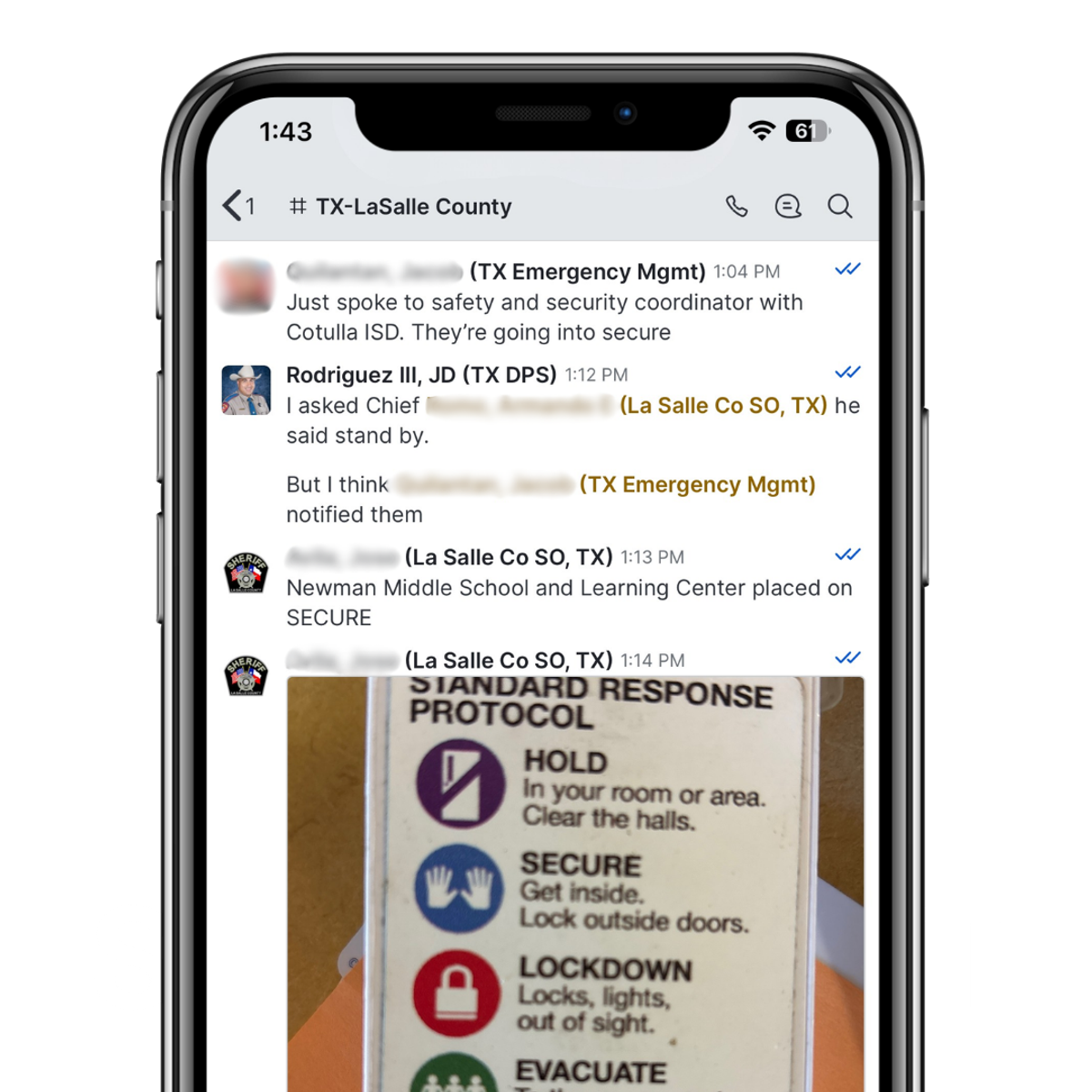
As freezing weather approached, emergency managers, law enforcement, fire departments, EMS, transportation officials, and supporting agencies established a coordinated response channel using Bridge 4 Public Safety.
Over the following thirty-six hours, agencies developed response plans, monitored conditions, coordinated staffing, shared situational updates, and communicated emerging issues.
The result was not simply better communication.
The result was increased operational capacity.
Creating Capacity Instead of Creating Chaos
In many emergency operations, leaders become overwhelmed by administrative coordination.
Phone calls, emails, status checks, staffing updates, resource requests, and information-sharing requirements can consume a significant portion of the response effort.
When communications become fragmented, valuable time is lost.
That time comes directly from the resources available to serve residents.
By centralizing communications into a shared operational environment, agencies can dramatically reduce the coordination burden placed on emergency managers and command staff.
During the winter weather operation, leadership reported that nearly all coordination occurred within the platform rather than through phone calls. This included operational updates from law enforcement, fire, EMS, emergency management, and transportation partners, allowing everyone to maintain a shared understanding of community needs and resource availability.
This allowed responders to focus their attention on community needs rather than communication logistics.
From Reactive Response to Proactive Service
One of the most compelling outcomes involved residents affected by power outages.
As deputies and fire personnel conducted patrols during the storm, reports of power outages were shared across the operational channel.
Instead of waiting for residents to request help, responders proactively checked on affected households.
Personnel determined whether residents needed assistance and identified individuals who might benefit from relocation to a warming center or emergency shelter.
This represents an important shift.
Rather than operating in a purely reactive mode, agencies were able to proactively identify vulnerable residents and offer assistance before conditions deteriorated.
That level of service is only possible when responders have time and capacity to focus on the community.
Better Information Leads to Better Decisions
Constituent services improve when decision-makers have access to accurate information.
During emergencies, county judges, elected officials, emergency managers, and agency leaders are frequently asked questions by residents.
Road closures.
Power outages.
School impacts.
Flooding.
Shelter availability.
Without real-time information, leaders must make phone calls and track down updates before they can answer constituent concerns.
A shared operational environment changes that.
Decision-makers can monitor verified updates from responders and partner agencies as events unfold.
This improves transparency, speeds decision-making, and helps ensure residents receive timely and accurate information.
Faster Multi-Agency Coordination Benefits Residents
Residents do not care which agency owns a particular responsibility.
They simply want problems solved.
Unfortunately, many emergencies require coordination among multiple organizations, including law enforcement, fire departments, EMS, public works, transportation agencies, utilities, schools, emergency management offices, and elected officials.
When those organizations operate in separate communication systems, delays occur.
Bridge 4 Public Safety allows agencies to collaborate within a single operational environment while maintaining appropriate access controls and security.
That means transportation officials can coordinate road conditions, emergency managers can coordinate shelters, law enforcement can provide situational updates, fire departments can report emerging hazards, and EMS providers can share patient transport status, hospital bed availability, and plans for relocating critical patients from affected areas.
The end result is faster service delivery to residents.
Doing More with Existing Resources
Public safety agencies are under constant pressure to do more with limited staffing and budgets.
Technology should not simply make communication easier.
It should help agencies increase the value they provide to their communities.
By reducing coordination overhead, agencies can redirect personnel toward activities that directly support residents.
Checking on vulnerable populations
Providing transportation assistance
Supporting shelter operations
Conducting welfare checks
Managing traffic control
Monitoring hazardous conditions
These activities create visible and meaningful value for constituents.
Built on Real-World Public Safety Experience
Bridge 4 Public Safety was created specifically to support the complex operational needs of public safety agencies.
Unlike consumer messaging platforms, it was designed around real-world emergency management and incident response workflows.
The platform supports secure collaboration among law enforcement, fire, EMS, emergency management, communications, IT, and other supporting disciplines.
Our team has worked alongside public safety agencies for years to understand the realities of large-scale incidents, disasters, special events, and day-to-day operations.
The result is a platform that helps agencies spend less time coordinating and more time serving their communities.
Better Service Through Better Coordination
The ultimate goal of public safety is not simply managing incidents.
It is protecting and serving people.
When agencies reduce communication friction, they create capacity.
When they create capacity, they can proactively help residents.
And when they proactively help residents, communities become safer, more resilient, and better prepared for future emergencies.
Technology alone does not improve constituent services.
But technology that removes barriers to collaboration can make exceptional constituent service possible.
When agencies spend less time coordinating information and more time helping people, communities benefit. To learn more about how effective communication supports disaster response operations, emergency management coordination, and multi-agency collaboration, read our article on disaster response communications:
FAQs
Ready to strengthen your team's communication security?
See how Bridge4PS can transform your emergency response coordination with secure, compliant messaging built for public safety.